Why Pilot Shirts Are White, and What That Demands of the Fabric
Airline uniform did not invent itself. When commercial aviation needed a visual language for authority and competence, it borrowed one that passengers already understood: the merchant marine. Captain and first officer, gold bars on the shoulder, the peaked cap, and beneath all of it the white shirt.
The convention stuck for practical reasons as much as symbolic ones, and those reasons still shape what the fabric has to do.
Why white persisted
- Contrast. Gold or silver epaulette bars read instantly against white. Rank is legible from the back of the cabin, which is the entire point of rank insignia.
- Neutrality. White carries no house style. The same shirt works under a navy jacket, a black one, or none, which is why it survived decades of airline rebrands.
- Heat. Tropical and Gulf operations put crew on open aprons in full sun. White reflects rather than absorbs, and the convention was set long before air-conditioned jetways were common.
- Visible discipline. A white shirt shows neglect immediately. That is a feature, not a flaw, in a profession built on procedure.
What white costs the fabric
Every advantage above is paid for by the cloth.
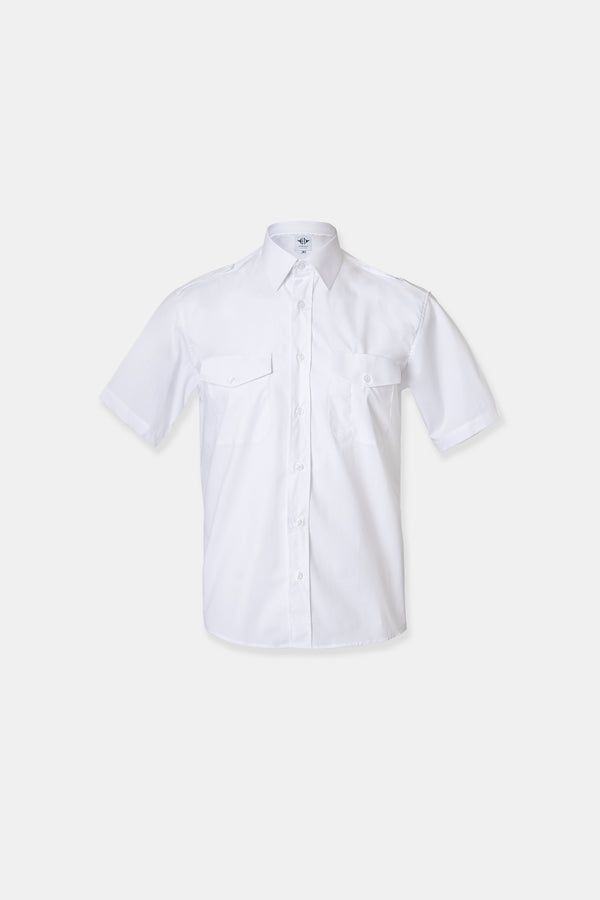
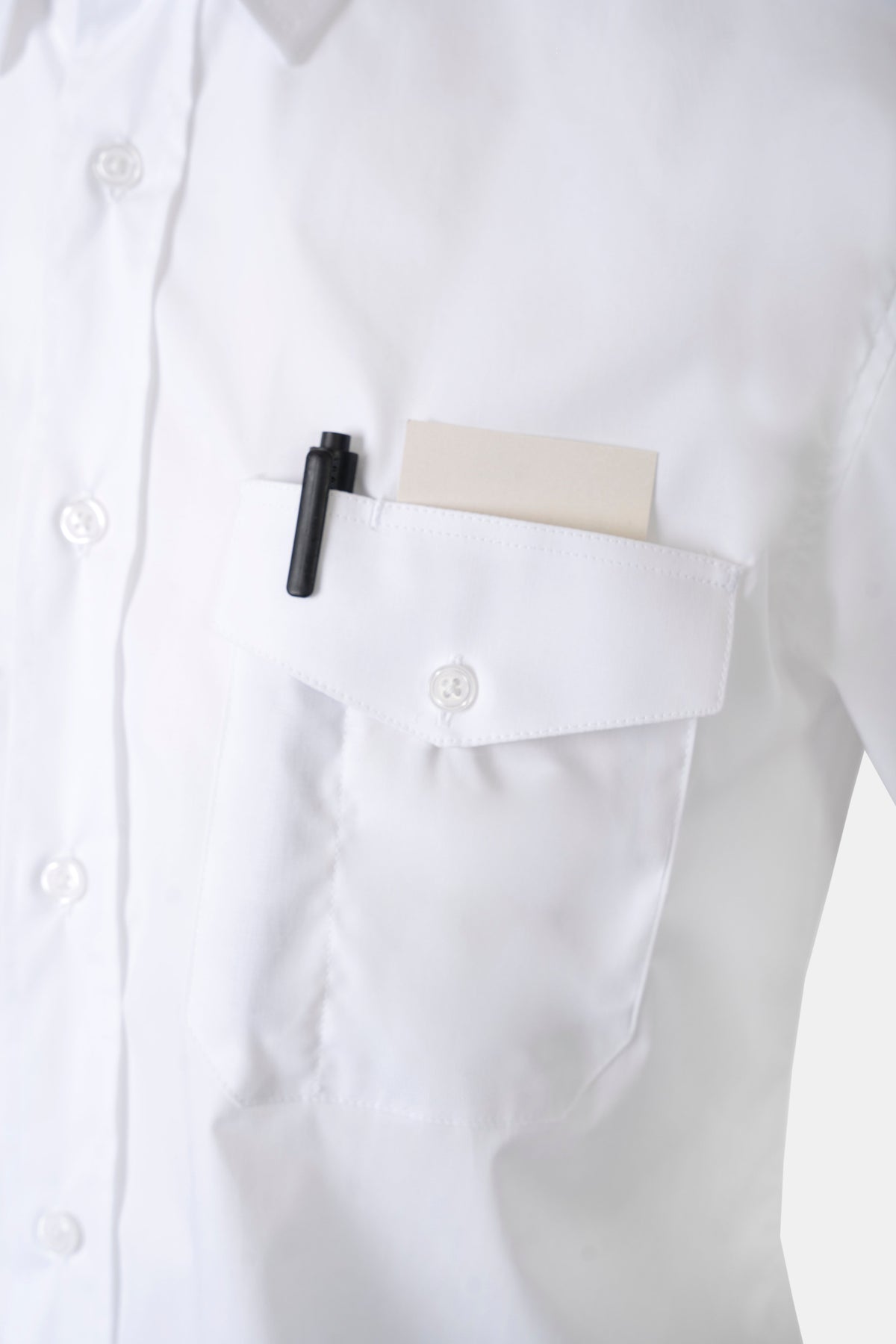
It hides nothing. Hydraulic fluid, coffee, sunscreen, ink from a pen in the chest pocket. A white uniform shirt is laundered far more often than a coloured one, which means the fabric faces two or three times the abrasion cycles over its life. Pilling and cuff wear arrive early on a shirt that was never engineered for that frequency.
It has to be opaque. A dark shirt can be light and thin. A white one cannot, because everything underneath it shows: the undershirt seam, the epaulette base, the harness. Opacity in white costs weight, or it costs finer yarn and a denser weave, which costs money. There is no third option, and this is where inexpensive uniform shirts give themselves away.
It yellows. Perspiration, deodorant residue and UV all shift white towards cream, and they do it unevenly, so the collar and underarm go first. Polyester in particular yellows permanently under chlorine bleach, which is exactly what most people reach for when a white shirt starts to look tired.
What a white uniform shirt therefore needs
- Enough weight and weave density to stay opaque over an undershirt
- Yarn and finishing chosen for repeated laundering, not for the feel of a new shirt in a shop
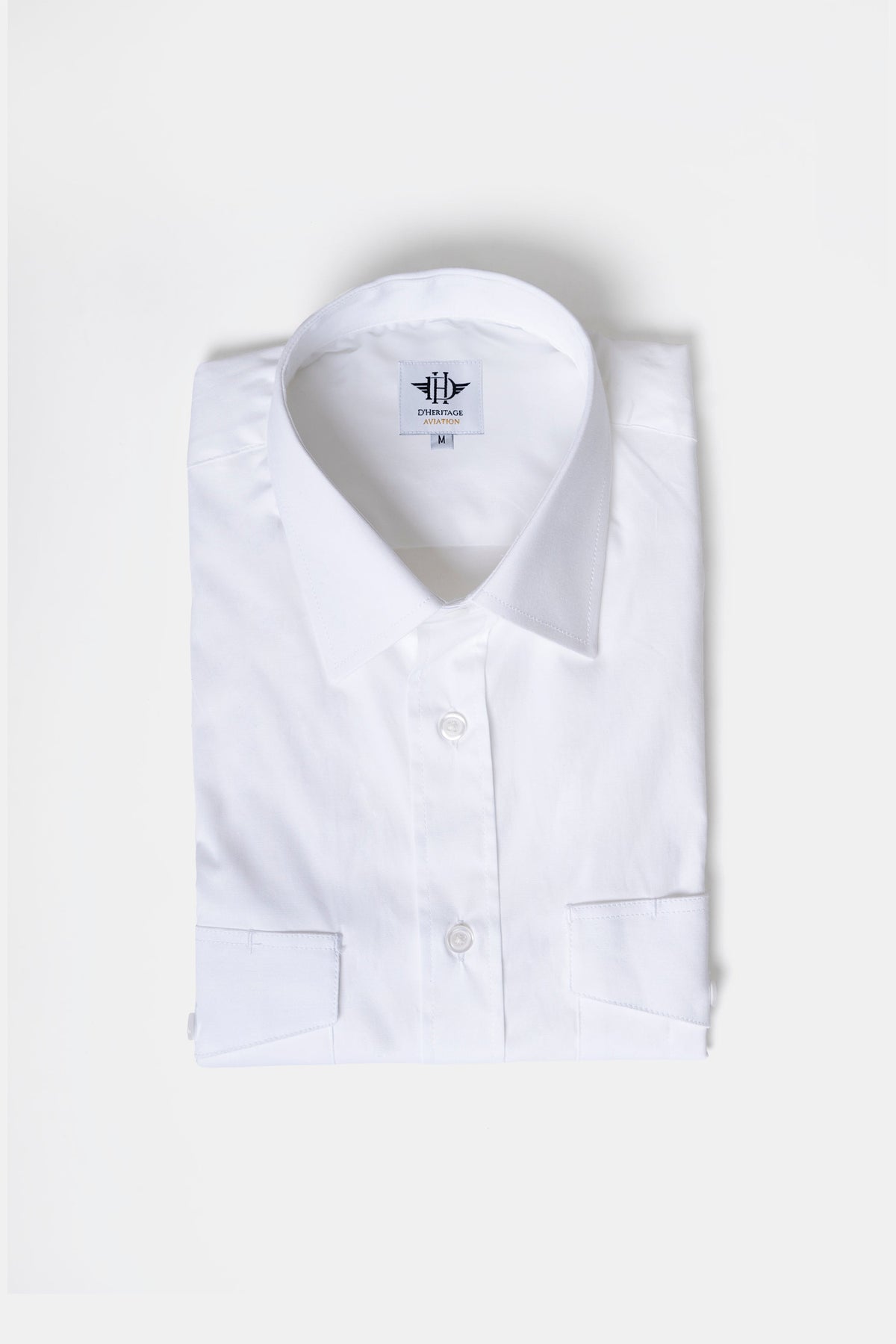
- A collar interlining that survives washing, since the collar is the part everyone looks at
- Reinforcement where a harness and a headset cable pass
Making white last
Most white shirts are killed by their owners, not by their duty cycle.
- Wash cool, at 30 degrees, and wash sooner rather than later. Perspiration sets into yellowing if it is left in the fibre.
- Never use chlorine bleach on a cotton and polyester blend. It yellows the polyester permanently. Use an oxygen-based whitener if you use one at all.
- Do not overload the drum. Shirts need water movement to rinse residue out, and detergent left in the fabric is a common cause of dullness.
- Dry in the shade. Direct sun bleaches unevenly and weakens fibre.
- Iron at medium heat. High heat glazes polyester and leaves a permanent shine on the collar and cuffs.
- Rotate. Four shirts in rotation last more than twice as long as two, because each one gets a rest and fewer wash cycles per month.
Our three pilot shirt constructions and their weights are set out on the Aviation Fabrics page.