Article: Made in Portugal: Where Our Pilot Shirts Are Made
Made in Portugal: Where Our Pilot Shirts Are Made
In 1974, in Vila de Cucujães, a textile workshop opened. It made garments for other people's labels for fifty years and closed in 2024. D'HERITAGE was founded in 2026, by the founder's son and grandson, and the Aviation line began with it. The two businesses are separate, connected by people and by criteria rather than by continuity.
The Aviation line came out of that inheritance rather than out of a market study. This is how, and why it matters to anyone buying uniform.
What fifty years of contract manufacturing teaches
A workshop that makes for other brands learns things a brand that outsources never does. It learns which fabric arrives consistent lot after lot and which one drifts. It learns that a shoulder seam three millimetres out is invisible on a hanger and obvious on a body. It learns that the cost of getting a pattern wrong is not the sample, it is the four hundred pieces cut from it.
Most of what a uniform buyer worries about is manufacturing knowledge, not design taste. Colour lot consistency on white. Whether a size L is the same L in eighteen months. Whether a single replacement shirt can be run without a minimum. These are questions about the relationship between a brand and the floor where the garment is cut.
Why aviation
Uniform work rewards exactly what a contract workshop is built for: precision, repeatability and specification held over time. Fashion rewards novelty. Uniform rewards the opposite, and the discipline of the two is not the same.
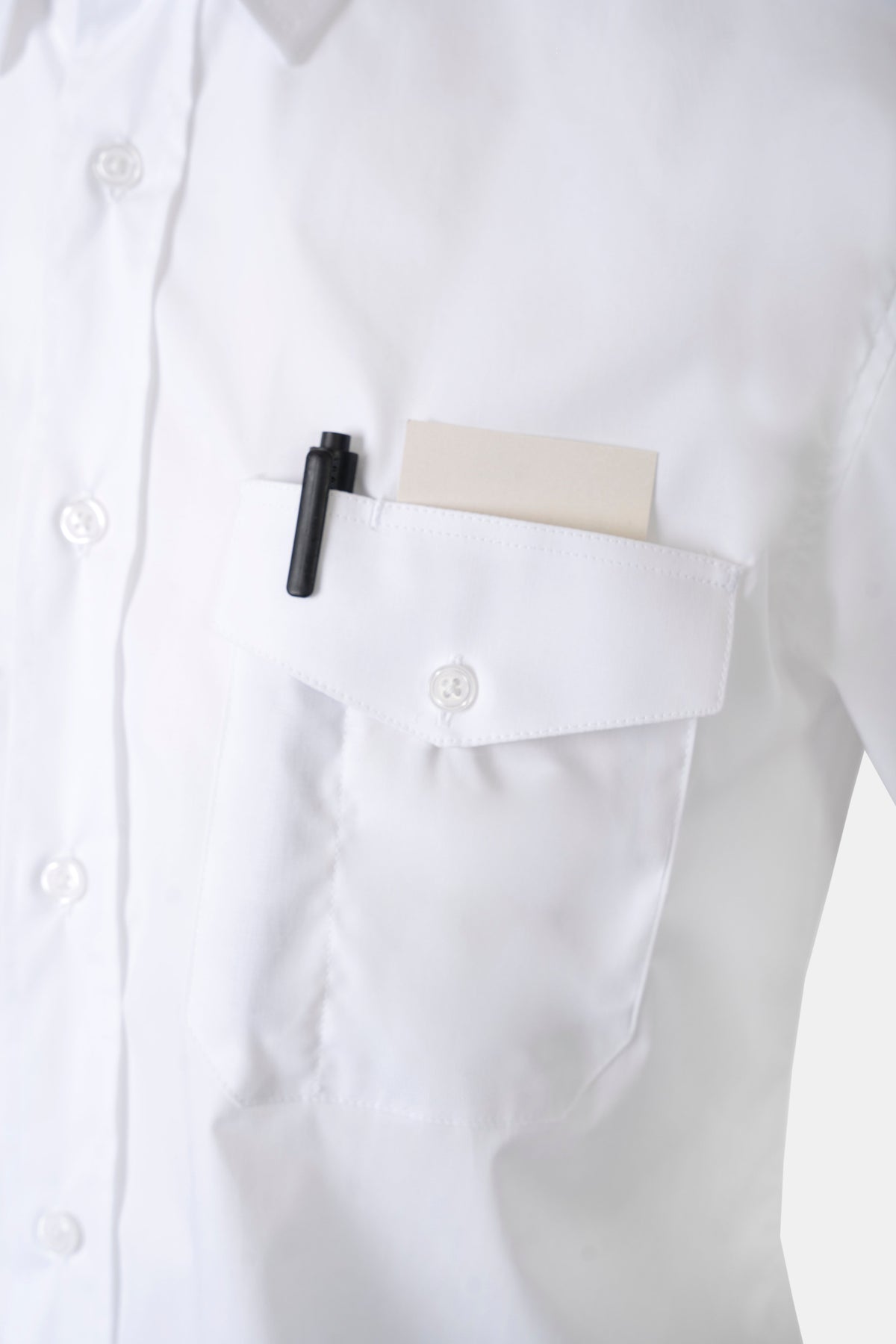
The aviation line also asks for something the trade already had, which is restraint. A pilot shirt has no room for expression. Every visible decision, the collar, the placket, the pocket, the shoulder strap, exists to serve function or to signal competence. There is nothing to hide behind. That is a demanding brief and a clarifying one.
Where the work is done
Every shirt is made in Vila de Cucujães, in Oliveira de Azeméis, in the north of Portugal. One town, one making floor, for the whole line.
The practical consequence is distance, or the absence of it. A pattern correction is a conversation, not a container and six weeks. A fabric that comes through wrong is caught at the cutting table rather than at the port. For uniform work, where the whole value is in the second order matching the first, this proximity is the product.
What the line is
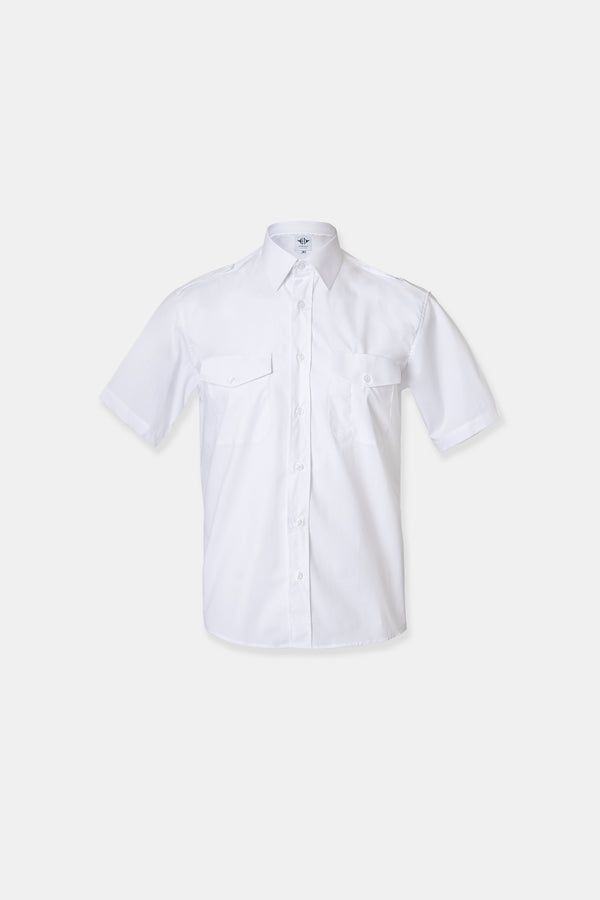
Three shirt constructions rather than one, because operations differ. The full comparison of weights and compositions is on our Aviation Fabrics page.
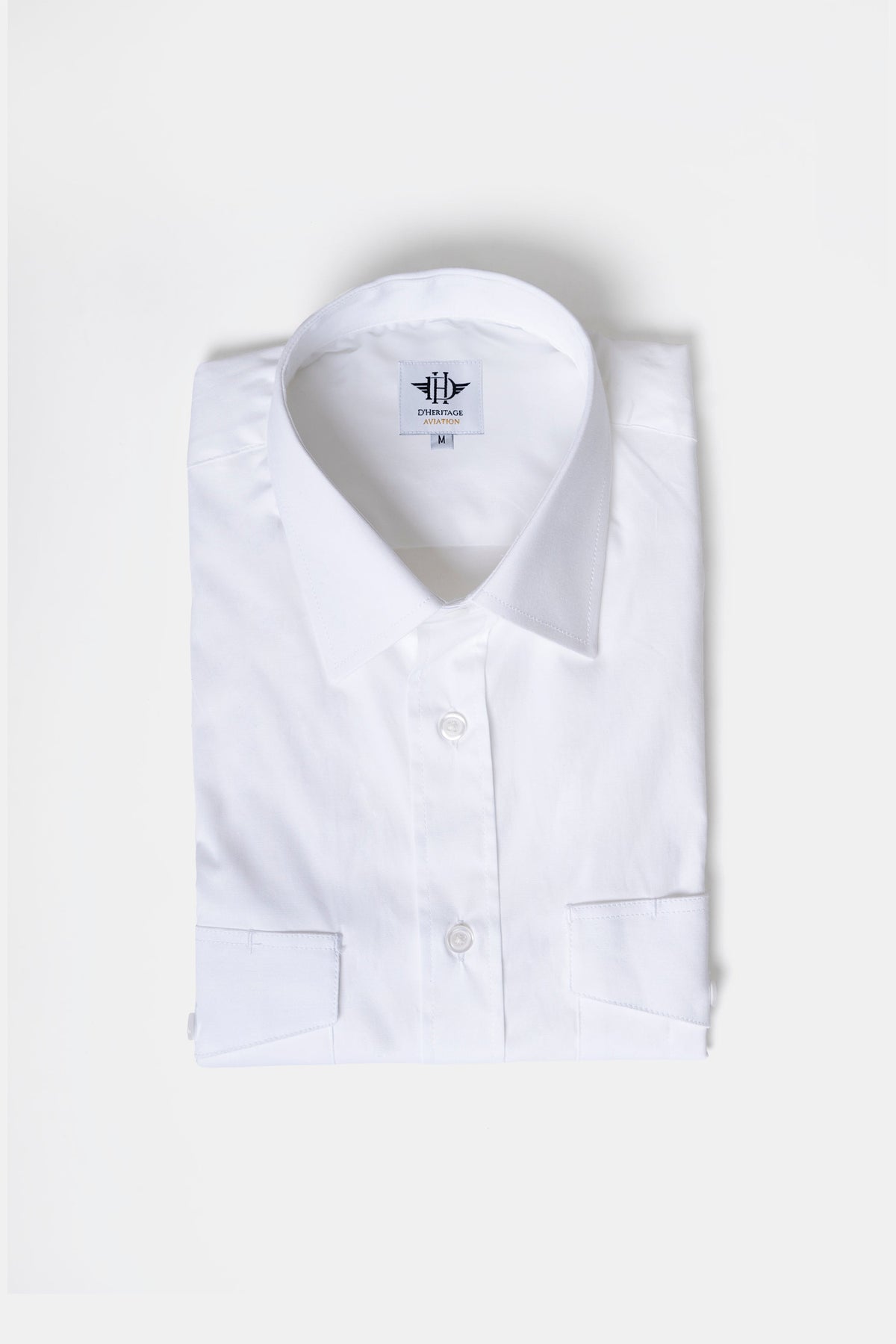
All white. Men's and women's patterns cut separately, not scaled from one another: men's S to XL, women's XS to XL. Shoulder straps for epaulettes, specified with you before cutting.
Made in Portugal, as a fact rather than a claim
The phrase appears on a great deal that was finished in Portugal and made elsewhere. In this case it means the fabric is cut, sewn and finished in one named place, Vila de Cucujães, and that we will tell you which place when you ask.
It is a smaller claim than most and a more verifiable one. If you are running a tender that asks for origin documentation, that distinction is the one that matters.
Working with us
For individual purchase, the Aviation line is available here. For flight schools, operators and crews, write to aviation@dheritage.pt with headcount, rank structure and rotation pattern, and we will come back with specification, lead times and pricing.